Kenya Walking Safaris: the Complete Guide
A grounded guide to walking safaris in Kenya, from Laikipia to Samburu and the Mara.
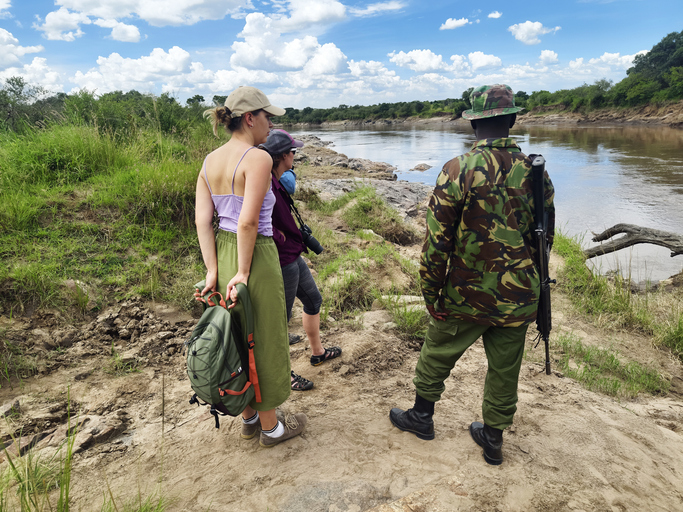
There are few safari experiences that change your perspective quite like walking through the bush on foot.
From inside a safari vehicle, the African landscape can sometimes feel surprisingly distant. You move quickly from one sighting to the next, often focused almost entirely on finding wildlife. On a walking safari, the pace slows down completely. The bush stops feeling like scenery and starts feeling alive in a much more immediate way.
You notice tracks crossing the dust long before you see the animal that made them. You become aware of wind direction, alarm calls, broken branches and the smell of dry earth warming in the morning sun. Even familiar animals suddenly feel very different when there is no vehicle around you.
Walking safaris in Kenya are not about reckless close encounters with dangerous animals. In reality, the best walks are usually calm, measured and deeply immersive. A good guide is not trying to create drama. The goal is to help you understand how the landscape works and how wildlife moves through it.
Kenya is one of the strongest walking safari destinations in Africa because of its conservancies, experienced guides, varied ecosystems and well developed safari infrastructure. Some areas offer short bush walks between game drives while others provide full day wilderness experiences through remote terrain.
This guide explains how walking safaris in Kenya actually work, where they are best, what to realistically expect, and how to choose the right experience for your trip.
Index
What Is a Walking Safari?
A walking safari is simply a guided safari experience done on foot rather than from inside a vehicle. In Kenya, these walks are usually led by highly experienced professional guides, often together with Maasai or Samburu trackers and, in some areas, armed scouts.
The experience can vary enormously depending on where you are staying. Some lodges offer short walks close to camp, while others specialise in much longer wilderness walks through conservancy land or remote terrain. Certain properties focus heavily on tracking and ecology, while others use walking more as an additional activity alongside traditional game drives.
What surprises many first time visitors is how unhurried walking safaris actually are. This is not hiking in the traditional sense. You are not covering large distances quickly. In many cases, a guide may stop repeatedly to explain tracks, plants, animal behaviour or subtle details in the landscape that would normally pass unnoticed from a vehicle.
That slower rhythm is a large part of what makes walking safaris so memorable.
Why Walking Safaris Feel Completely Different
One of the biggest changes when walking through the bush is your sense of scale.
An elephant viewed from a safari vehicle often feels calm and familiar. Seeing the same animal on foot, even from a safe distance, immediately changes your perspective. You become far more aware of its size, movement and presence.
But walking safaris are not only about larger wildlife. In fact, some of the most interesting moments often involve things that are rarely noticed during game drives. A good guide may spend several minutes interpreting tracks in the sand or explaining how birds react differently depending on the type of predator nearby. Over time, you begin realising how much information exists in the landscape itself.
The experience also feels more immersive because there is no engine noise, no metal frame around you and no sense of separation from the environment. You hear the wind properly. You smell rain before it arrives. You notice the texture of the terrain beneath your feet.
Many experienced safari travellers eventually find themselves valuing walks just as highly as classic wildlife sightings.
Are Walking Safaris in Kenya Safe?
This is understandably one of the first questions most people ask.
Walking safaris in Kenya are generally very safe when conducted by experienced guides and reputable camps. Professional safari guides spend years learning how to read animal behaviour, understand terrain and assess situations long before they become dangerous.
The reality is that most wildlife actively avoids people on foot when approached carefully and respectfully. Guides are constantly monitoring wind direction, visibility, animal movement and group positioning. If conditions are not suitable, routes are adjusted or walks are shortened.
In many conservancies, walking safaris operate under strict rules regarding:
group sizes
distances from wildlife
radio communication
scout support
areas where walking is permitted
The important thing is understanding that walking safaris are real wilderness experiences rather than staged attractions. Guests need to listen carefully to instructions and trust the judgement of their guides at all times.
Ironically, the professionalism involved often makes walking safaris feel calmer and more controlled than many people expect beforehand.
What Makes Kenya Especially Good for Walking Safaris?
Kenya has several advantages that make it particularly strong for walking safaris compared to many other safari destinations in Africa.
One of the biggest is the conservancy model. Private conservancies allow a level of flexibility that is often impossible inside heavily regulated national parks. Walking, off road driving and low vehicle density create a much quieter and more natural safari environment overall.
Kenya also has an exceptionally strong guiding culture. Many walking safaris are led by Maasai or Samburu guides whose understanding of the landscape comes from a lifetime spent living within these ecosystems. Their ability to read tracks, behaviour and environmental clues can be extraordinary.
Another strength is the sheer variety of terrain. Walking in Samburu feels completely different from walking in Laikipia or the Chyulu Hills. Some regions are dry and rugged, others open and grassy, while certain conservancies combine volcanic landscapes, woodland and open plains within relatively small areas.
Kenya’s safari infrastructure is also very well developed. Walking experiences can easily be integrated into luxury fly in safaris, photographic trips or broader itineraries without sacrificing comfort.
The Most Popular Areas for Walking Safaris in Kenya
Rather than listing the "Best" areas for walking safaris I prefer to call this section "The most popular areas..." because I truly believe that any area can be great as long as it is lead by professional and experienced guides.
Choosing the right area often depends on the style of safari you're hoping for. The iconic open plains of the greater Mara ecosystem, for example, feel completely different from the dry, rocky terrain of the north. The volcanic hills of the Chyulus, meanwhile, offer a sense of ancient drama that you won't find anywhere else.
Each region has its own character, wildlife, and rhythm. Below, we break down the best and most rewarding areas for walking in Kenya to help you find the perfect fit for your trip.
Laikipia
Laikipia is arguably the strongest walking safari region in Kenya.
The area combines vast private conservancies, relatively low tourism density and highly experienced guides. Unlike some safari destinations that focus almost entirely on vehicle based wildlife viewing, Laikipia often feels built around immersion and exploration.
Walking here tends to feel quieter and more spacious than in many southern safari areas. The terrain changes constantly, shifting between open plains, rocky hills, acacia woodland and dry riverbeds. Because wildlife densities are spread across large conservancies rather than concentrated into a small reserve, the experience feels less pressured and more natural.
For photographers, Laikipia can be particularly rewarding. The lower vehicle density often creates cleaner, less chaotic wildlife encounters, while the varied terrain produces more interesting compositions and changing light conditions throughout the day.
It is also one of the best regions in Kenya for travellers who want walking to be a central part of the safari rather than just an additional activity.
Mara Conservancies
The private conservancies surrounding the Maasai Mara offer a very different style of walking safari.
Here, the landscape is more open and wildlife densities are often higher. Walks are usually shorter than those found in remote wilderness areas and are commonly combined with game drives during the same day.
For many visitors, the Mara conservancies are an ideal introduction to walking safaris because they balance accessibility, comfort and strong wildlife viewing exceptionally well. The terrain is generally manageable, visibility is good, and camps often combine high end guiding with luxury accommodation.
Walking in the Mara is less about covering long distances and more about slowing down enough to experience the plains differently. Even familiar animals such as zebra or giraffe feel surprisingly different when encountered quietly on foot.
Samburu
Walking safaris in Samburu have a much rawer and more rugged feel.
The environment is harsher than southern Kenya, with dry riverbeds, thorn scrub and rocky hills replacing the endless grasslands many people associate with East African safaris. This gives the entire experience a stronger sense of wilderness.
Samburu also rewards patience. Guides here often focus heavily on tracks, adaptation and environmental awareness rather than purely searching for large wildlife sightings. The landscape itself becomes part of the experience.
The region is especially interesting because of its specialised northern species such as gerenuk, Grevy’s zebra and reticulated giraffe, all of which feel perfectly adapted to the dry terrain around them.
For photographers, the textures and light in Samburu can be exceptional, particularly during early mornings and late afternoons when the landscape begins to soften.
Chyulu Hills
The Chyulu Hills remain surprisingly overlooked despite being one of Kenya’s most visually striking walking safari regions.
This is not classic open savanna country. The landscape feels older and more dramatic, with volcanic hills, lava fields, forest pockets and sweeping views toward Kilimanjaro. In certain areas, it almost feels prehistoric.
Walking here is often less focused on intense wildlife viewing and more centred around atmosphere, scenery and immersion in the landscape itself. The pace tends to be slower and quieter, which suits travellers looking for a more reflective safari experience.
The Chyulus also work particularly well for people who want a combination of walking, horseback riding and traditional game drives within the same itinerary.
Amboseli Ecosystem
Walking around the greater Amboseli ecosystem offers a very different perspective compared to the classic postcard imagery of elephants beneath Kilimanjaro.
Most meaningful walking experiences take place in conservancy areas outside the national park itself, where guides can move more freely through the landscape. The terrain is open and visibility is often excellent, creating a strong sense of scale.
This is one of the best places in Kenya to appreciate how elephants move through an ecosystem rather than simply photographing them from a vehicle. On foot, the relationship between wildlife, local communities and the landscape becomes much easier to understand.
For photographers, the openness of Amboseli can create beautifully layered environmental compositions, especially during softer early morning light.
What Wildlife Can You See on a Walking Safari?
People often assume walking safaris revolve entirely around dangerous animals, but the experience is usually far broader than that.
You may encounter elephants, giraffe, zebra, antelope or buffalo, but much of the experience involves understanding the ecosystem itself. Tracks, scent markings, feeding signs and bird behaviour all become part of the story.
Predator encounters do happen occasionally, but reputable guides approach these situations cautiously and responsibly. Walking safaris are not designed around pushing close to lions or leopards for excitement.
Ironically, many guests finish a walking safari remembering smaller details more vividly than the larger wildlife itself. Things like following fresh tracks through soft dust, hearing distant alarm calls or watching how a guide interprets subtle signs in the landscape often become the moments that stay with people longest.
Walking Safari Photography Tips
Walking safaris create very different photographic conditions compared to traditional game drives.
One of the biggest mistakes photographers make is carrying too much equipment. Heavy camera setups quickly become exhausting on foot, especially in warm conditions. Walking also limits how often you can stop to change lenses or reorganise gear.
Interestingly, walking safaris often favour wider compositions rather than extreme telephoto photography. The landscape becomes part of the experience, and images that show scale, atmosphere and interaction with the environment often feel more powerful than tightly cropped wildlife portraits.
Personally, I often find myself using medium or wider focal lengths more frequently during walking experiences because they help preserve the feeling of actually being there. On foot, the relationship between animal and landscape becomes much more important.
Walking also changes how you observe light. Because you move slowly through the terrain, you become more aware of shifting shadows, dust in the air and how early or late light shapes the environment around you.
What to Wear on a Walking Safari in Kenya
Comfort matters far more than looking traditionally “safari styled.”
Lightweight, breathable clothing in neutral colours usually works best. Olive, muted green, brown and soft earth tones blend naturally into the environment while also remaining practical in dusty conditions.
Footwear does not need to be overly technical for most walking safaris in Kenya. Comfortable walking shoes or lightweight hiking boots are usually sufficient unless you are joining a more demanding trekking style experience.
A hat, sunscreen and lightweight long sleeves are also extremely useful, particularly in dry northern regions where the sun can feel surprisingly intense even during cooler months.
The most important thing is simply being comfortable enough to focus on the experience rather than your clothing.
Luxury Walking Safaris in Kenya
Kenya has some exceptionally strong luxury walking safari experiences, particularly within private conservancies.
The best camps combine high quality guiding with low guest density, strong conservation access and genuinely flexible safari activities. In these environments, walking becomes part of daily safari life rather than a short optional extra.
Luxury walking safaris are not necessarily about physical difficulty. In most cases, the luxury comes from:
privacy
guide quality
exclusivity
access to quieter areas
slower safari pacing
personalised experiences
The strongest camps tend to be those where guides genuinely enjoy walking and where the surrounding conservancy allows meaningful freedom to explore on foot.
Walking Safari vs Game Drives
Walking safaris and game drives are often presented as competing experiences, but in reality they complement each other extremely well.
Game drives remain the best way to cover large distances efficiently and maximise wildlife sightings, particularly for predators. They are also generally better suited for long lens photography and families with younger children.
Walking safaris offer something entirely different. They slow the safari down and create a much deeper awareness of the environment itself. Instead of focusing only on finding animals, you begin understanding how the ecosystem functions as a whole.
The best safari itineraries usually combine both approaches rather than choosing one over the other.
Who Should Choose a Walking Safari?
Walking safaris are ideal for travellers who enjoy:
slower travel
learning about ecosystems
tracking
photography
guide interaction
immersive experiences
They are especially rewarding for repeat safari visitors who already understand traditional game drives and want a deeper connection to the landscape.
That said, walking safaris may not suit travellers whose main priority is constant high intensity wildlife viewing or very predictable sightings. The rewards are often more subtle and experiential than dramatic.
Frequently Asked Questions
Are walking safaris dangerous?
Walking safaris involve real wilderness conditions, but professionally guided walks in Kenya are generally very safe. Experienced guides are trained to assess animal behaviour and avoid dangerous situations before they develop.
Do you need to be fit for a walking safari?
Most walking safaris in Kenya are relatively relaxed and do not require exceptional fitness. However, some longer wilderness walks or multi day experiences may be more physically demanding.
What is the best walking safari area in Kenya?
Laikipia is often considered the strongest overall walking safari region because of its conservancies, guiding quality and landscape diversity. The Mara conservancies, Samburu and Chyulu Hills are also excellent depending on the type of experience you want.
Can beginners do walking safaris?
Absolutely. Many Kenya walking safaris are designed for first time safari visitors and involve short, manageable walks combined with game drives.
Can you photograph wildlife during walking safaris?
Yes, although the photographic approach is often different from vehicle based safaris. Walking tends to favour environmental storytelling and wider compositions rather than purely telephoto wildlife portraits.
What is the best time of year for walking safaris in Kenya?
Walking safaris work well throughout much of the year, although dry seasons generally provide easier walking conditions and better visibility. Different regions can vary considerably depending on rainfall patterns.