Elephant Garden Camp Review: My Honest Stay Outside Amboseli's Gates
Wondering if this intimate camp outside Amboseli is right for you? I share the real pros and cons from my recent stay, from dusty commutes to encounters with a legendary elephant.
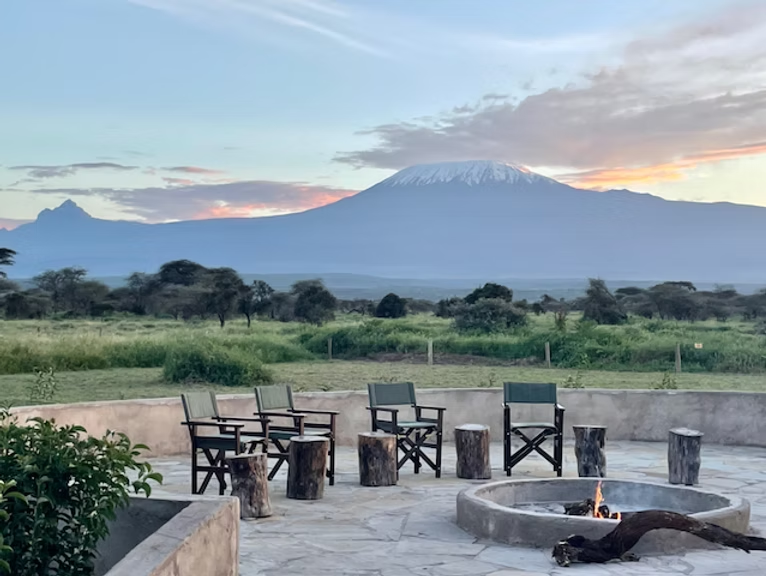
Elephant Garden Safari Camp is a fantastic, intimate tented lodge located just outside Amboseli's Kimana Gate. It offers superb personal service and a strong sense of connection to the surrounding wilderness. However, its position means dealing with evening traffic and you are slightly removed from the deeper park interior compared to camps located further inside Amboseli.
My September Safari at the Edge of the Park
There's a feeling you get when you arrive in the Amboseli ecosystem. It's a landscape of immense scale and fine detail all at once. The sky feels enormous, Mount Kilimanjaro looms on the horizon when the clouds part, and the air itself is thick with fine, pale dust kicked up by countless hooves. The word Amboseli itself actually means "Salty Dust". I was last there in September, a beautiful time of year when the plains are dry and wildlife is drawn to the permanent swamps. For this trip, my base was Elephant Garden Safari Camp, a small lodge with a big reputation, and I was keen to see if it lived up to the hype.
Choosing a lodge is one of the biggest decisions you make when planning a safari. It sets the tone for your whole experience. I chose Elephant Garden Camp specifically because I would have access to a custom built photography vehicle. I was intrigued by its location just outside the official boundary of Amboseli National Park because at the time thats where the iconic super tusker Craig normally spent his time. Craig is unfortunately no longer with us. I knew the location would have its ups and downs, and I was ready for an authentic experience. Here’s how it went.
First Impressions: A Warm Welcome to a Quiet Retreat
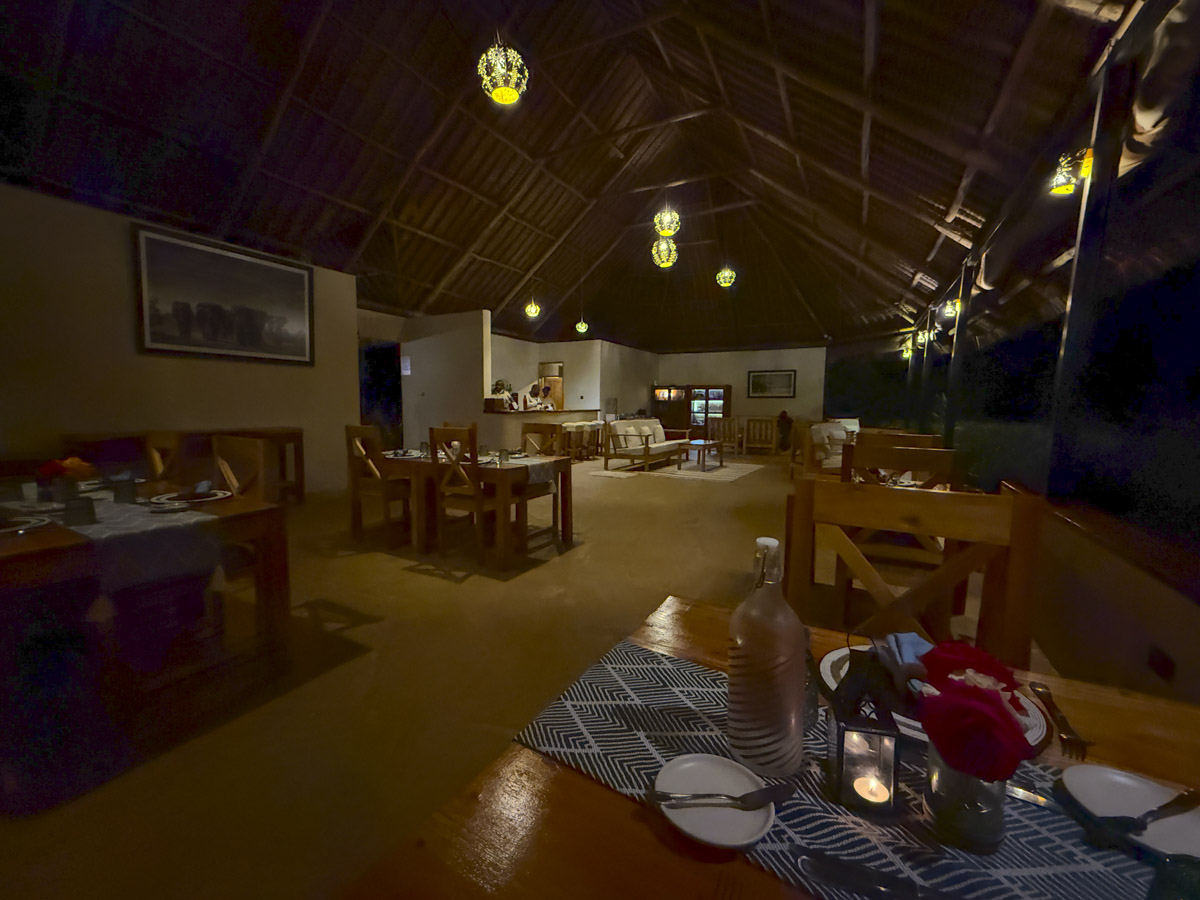
Finding the camp is straightforward, as it's tucked away a short drive from the Kimana Gate. The first thing you notice is the sense of intimacy. This is not a large, resort-style lodge. It's a small, personal camp with just a handful of tents, a central dining area, and a campfire circle. The welcome was immediate and warm, with cool towels and a refreshing drink that tasted like heaven after the dusty drive.
The staff were, without exception, super friendly. Immediately, they knew my name and it felt less like checking into a hotel and more like arriving at a friend's home in the bush. This is the magic of a small camp, something you can't replicate in a larger property.
The Tented Room: My Canvas Home
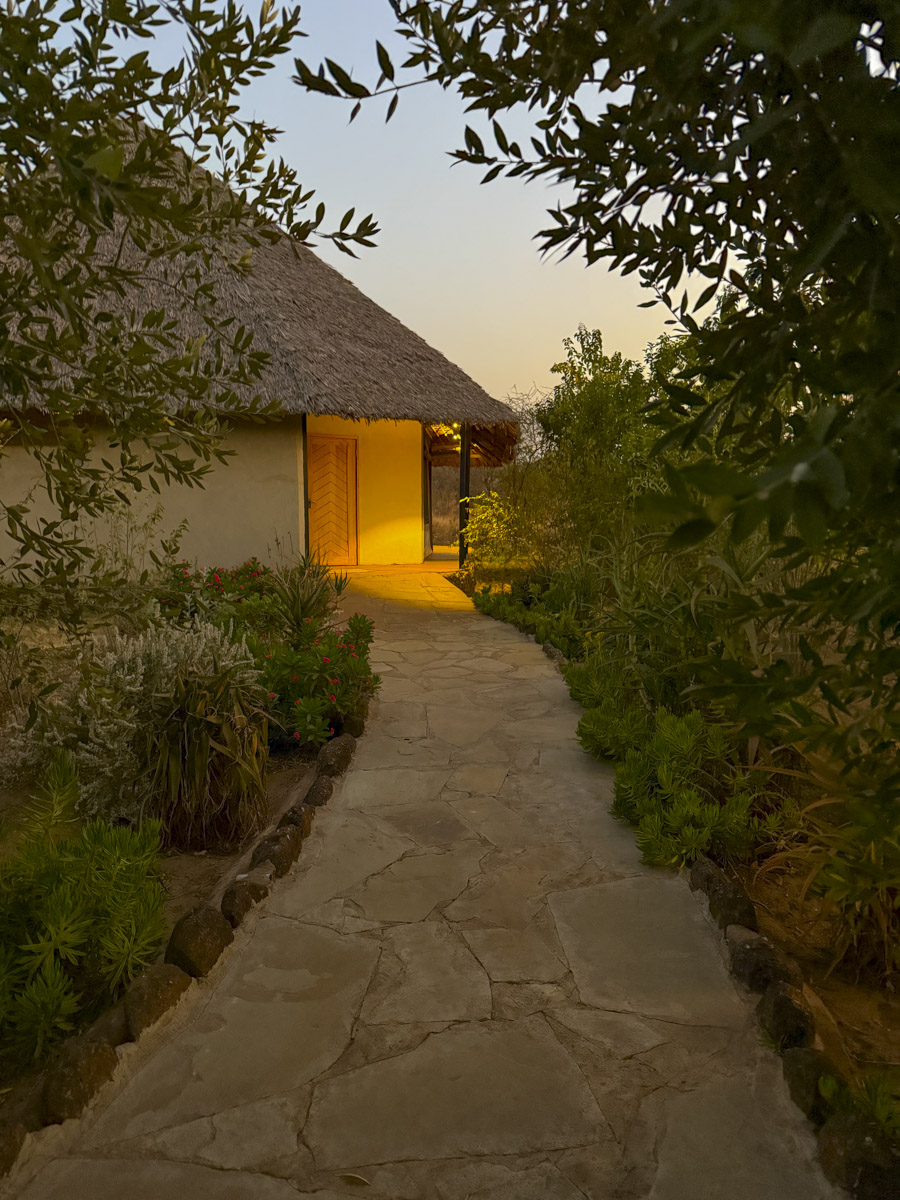
I’ve stayed in a lot of safari tents over the years, and I can say my tented room at Elephant Garden was fantastic. It struck the perfect balance between rustic charm and real comfort. The bed was huge and comfortable, draped in mosquito netting that felt both practical and romantic. The en-suite bathroom was simple but had everything you needed, including a hot shower with great water pressure, a real luxury in a remote location.
My favorite part was the private veranda out front. Each morning, I'd sit there with a cup of coffee, listening to the sounds of the bush waking up. At night, with only the canvas between me and the wild, you hear everything - the distant whoop of a hyena, the chirping of crickets, an elephant rumbling somewhere in the darkness. It’s an immersive experience that connects you directly to the environment.
The Double-Edged Sword: Staying Outside the Park Gates
The camp's location outside the Kimana Gate is probably the single most important factor to consider. It was both the source of my biggest frustration and my most unique sighting.
The Downside: The 6 PM Rush Hour
Amboseli National Park has strict opening and closing times. Every vehicle has to be out by sunset, which is usually around 6:30 PM. This creates a bit of a safari traffic jam. After a magical afternoon watching elephants against the backdrop of a setting sun, the spell is broken slightly by the need to join a convoy of vehicles all heading for the gate at the same time.
The hustle and the kicked-up dust as everyone raced back to their respective lodges wasn't amazing. It felt a bit like a commute, and it took away from that feeling of being alone in the wilderness. You lose that precious last half-hour of light inside the park, and you have to be mindful of the time, rather than just enjoying the moment.
The Upside: A Royal Neighbour Named Craig
Here's the flip side, and it's a big one. Being outside the park meant I was closer to the community lands and conservancies where wildlife roams freely. This area, just outside Kimana Gate, happens to have been part of the home range of one of Africa's most magnificent elephants. A Super Tusker known as Craig. Craig has since passed away, leaving a profound void. For those who don't know, Super Tuskers are male elephants whose tusks are so long they reach the ground. There are precious few of them left on the continent. Seeing and working with Craig was always a privilege.
Because Elephant Garden Camp was in his territory, the chances of an encounter were significantly higher. On my second day, we found him moving slowly and majestically through the acacia woodland, not far from the camp. He wasn't surrounded by dozens of tourist vehicles, just us. It was a profoundly moving, almost spiritual sighting that I would never have had if I were rushing back to a lodge deep inside the park.
A major perk of being in a private conservancy just beyond the park's borders is the freedom to drive off-road. This can be a real game-changer, particularly for wildlife photography. One of the benefits of not being inside the park itself.
The Small Camp Experience: Intimate and a Little Lonely
Being there in September, I often found I was the only guest, or one of just a few. This, like the location, had two very different sides.
On the one hand, I got all the attention. The service was impeccable. Dinners were set up for me by the campfire, and the chef would come out to chat about the menu. My guide was entirely focused on what I wanted to see and do. It felt incredibly exclusive, like having my own private safari camp. There was no jostling for the best seat in the vehicle or waiting your turn for a second helping at the buffet.
On the other hand, it could feel a bit lonely at times. Part of the joy of a safari is making new contacts and sharing the day's stories with fellow travellers over a drink. Recounting a lion sighting or laughing about a bumpy road connects you to people. When you're the only one in the dinner area, the evenings can be very quiet. For a solo traveller like myself, this is a matter of personal preference. Some nights I loved the solitude; other nights I missed the camaraderie.
My Verdict: Who Is Elephant Garden Safari Camp For?
So, should you stay here? It really depends on what kind of traveller you are.
I would highly recommend Elephant Garden Safari Camp to:
Seasoned safari-goers who appreciate the intimacy and authenticity of a small camp and understand the trade-offs of being outside a national park.
Photographers who are hoping for a chance to see wildlife in its natural habitat, away from the main park crowds and would appreciate the benefits of being able to drive off-road.
Solo travellers or couples who value peace, quiet, and personalized service over a bustling social scene.
I might suggest looking at other lodges inside Amboseli National Park if:
This is your first-ever safari, and you want to maximize every possible minute of game-viewing time inside the park without worrying about gate times.
You're a very social traveller who enjoys meeting lots of new people and sharing stories in a larger lodge environment.
For me, the experience was overwhelmingly positive. The slightly inconvenient evening commute was a small price to pay for the incredible hospitality and the unforgettable memory of spending quiet time with a true giant of the African wilderness. Elephant Garden Safari Camp isn’t just a place to sleep-it's a place that offers a different, more personal perspective on the magnificent world of Amboseli.
Frequently Asked Questions
Is Elephant Garden Safari Camp inside Amboseli National Park?
No, Elephant Garden Safari Camp is located just outside the official park boundary, a short drive from the Kimana Gate. This allows guests to experience the surrounding community conservancy areas as well as the main park.
What is the best time of year to visit Amboseli?
It all depends what you are looking for. The best time to visit Amboseli is during the dry seasons, from June to October and January to February. During these months, the vegetation is thinner and animals congregate around the swamps and waterholes, making them easier to spot. The views of Mount Kilimanjaro are also typically clearer. Photographers might enjoy the cloudy skies during the wet season.
Is it better to stay inside or outside Amboseli National Park?
This depends on your priorities. Staying inside the park offers maximum convenience for game drives and allows you to be out at first and last light. Staying outside can be more affordable, offer unique cultural experiences, and provide access to areas and wildlife that frequent lands beyond the park's borders. Read more about choosing the lodge for your safari
Who is the elephant named Craig in Amboseli?
Craig was one of Kenya's last remaining "Super Tuskers". A super tusker or big tusker as they are also known as is elephant whose tusks are so long they almost touch the ground. He was a magnificent and gentle giant who roamed the Amboseli ecosystem for over 5 decades. Craig died of natural cause in early January of 2026.
How many tents does Elephant Garden Safari Camp have?
Elephant Garden is an intimate camp with a small number of tents. It currently has 10 spacious safari tents, which ensures a personal and uncrowded experience for all guests.