Searching for a Shadow: How to See the Famous Black Leopard of Kenya
She’s a living shadow, a ghost of the bush. We share the story of Giza, the famous black leopard of Laikipia, and how you can plan a safari for a chance to see this incredibly rare cat.
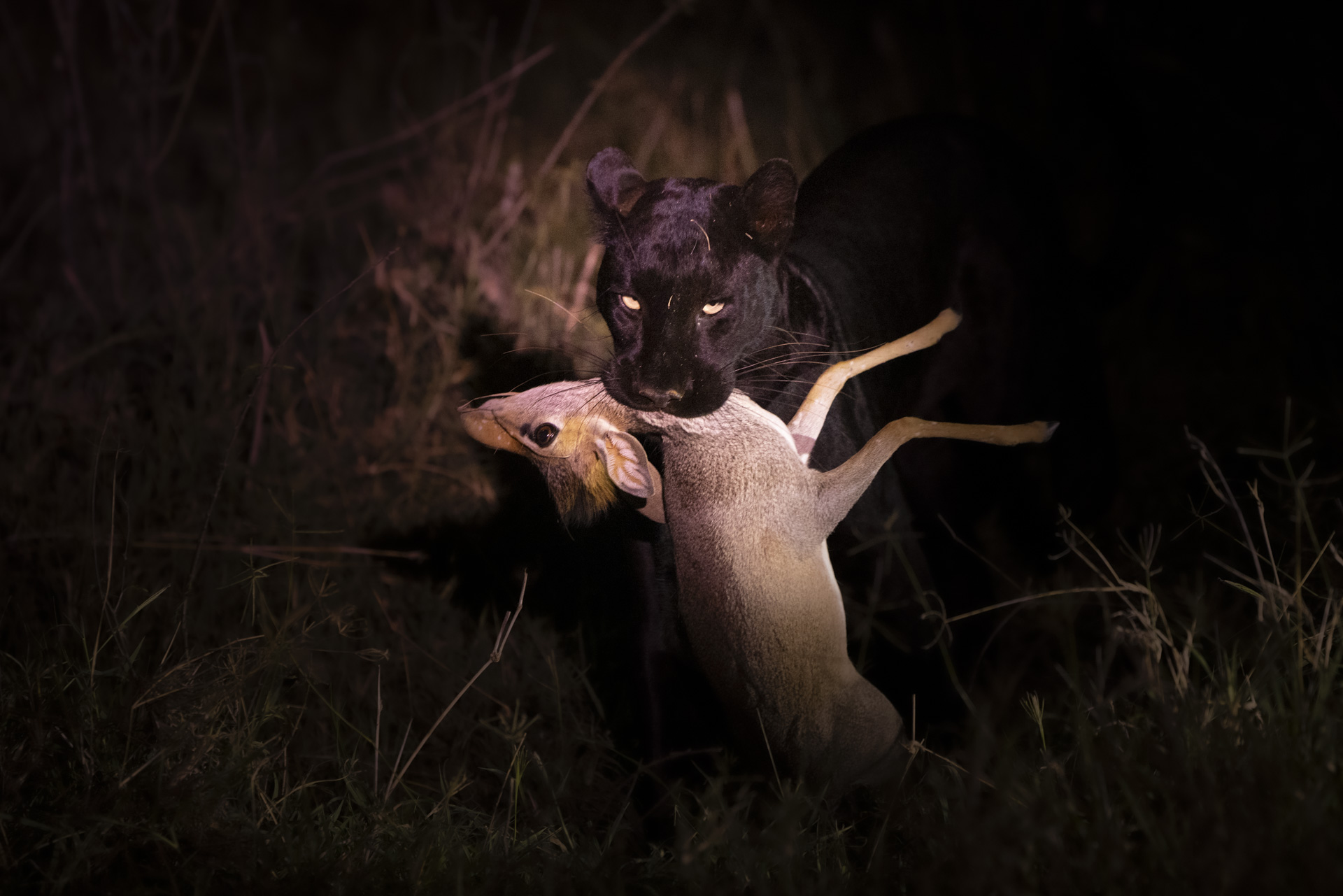
On any safari, there’s a secret checklist that every visitor carries in their head. The Big Five, of course. Maybe a cheetah, or a pack of wild dogs. But for many, the ultimate prize, the animal that symbolises the wild and secretive heart of Africa, is the leopard. To see one draped over a sausage tree branch at midday or slinking through the long grass at dusk is a moment you never forget.
Now, imagine a leopard made of midnight. A cat so dark it seems to absorb the light around it, a living shadow moving through the bush. This is the magic of the black leopard. For decades, they were the stuff of legend in Africa, with only fleeting, unconfirmed glimpses. But today, in the highlands of central Kenya, the legend is real. Her name is Giza, and seeing her has become the holy grail for safari lovers. So, let’s talk about what a black leopard really is, the story of this specific cat, and how you might plan a trip to the beautiful Laikipia Plateau for a chance-in-a-lifetime sighting.
The Mystery of the Black Leopard Explained
First things first, what is a black leopard?
It's a common question, and the answer is simpler than you might think. A black leopard is not a separate species. You might have heard the term “black panther,” but that’s not a species either- it’s a general name for any big cat with a condition called melanism. In the Americas, a black panther is a melanistic jaguar. In Africa and Asia, it’s a melanistic leopard.
Melanism is a genetic quirk, the opposite of albinism. It causes an over-production of dark pigment, called melanin, in the skin and fur. The result is a cat that appears solid black. But here’s the secret- the leopard’s trademark spots, its rosettes, are still there. You just can’t see them easily. In the right light, if one of these cats walks past the safari vehicle, you can often see the faint, ghostly patterns in its coat. It’s like a black silk shirt with an even blacker pattern woven into it.
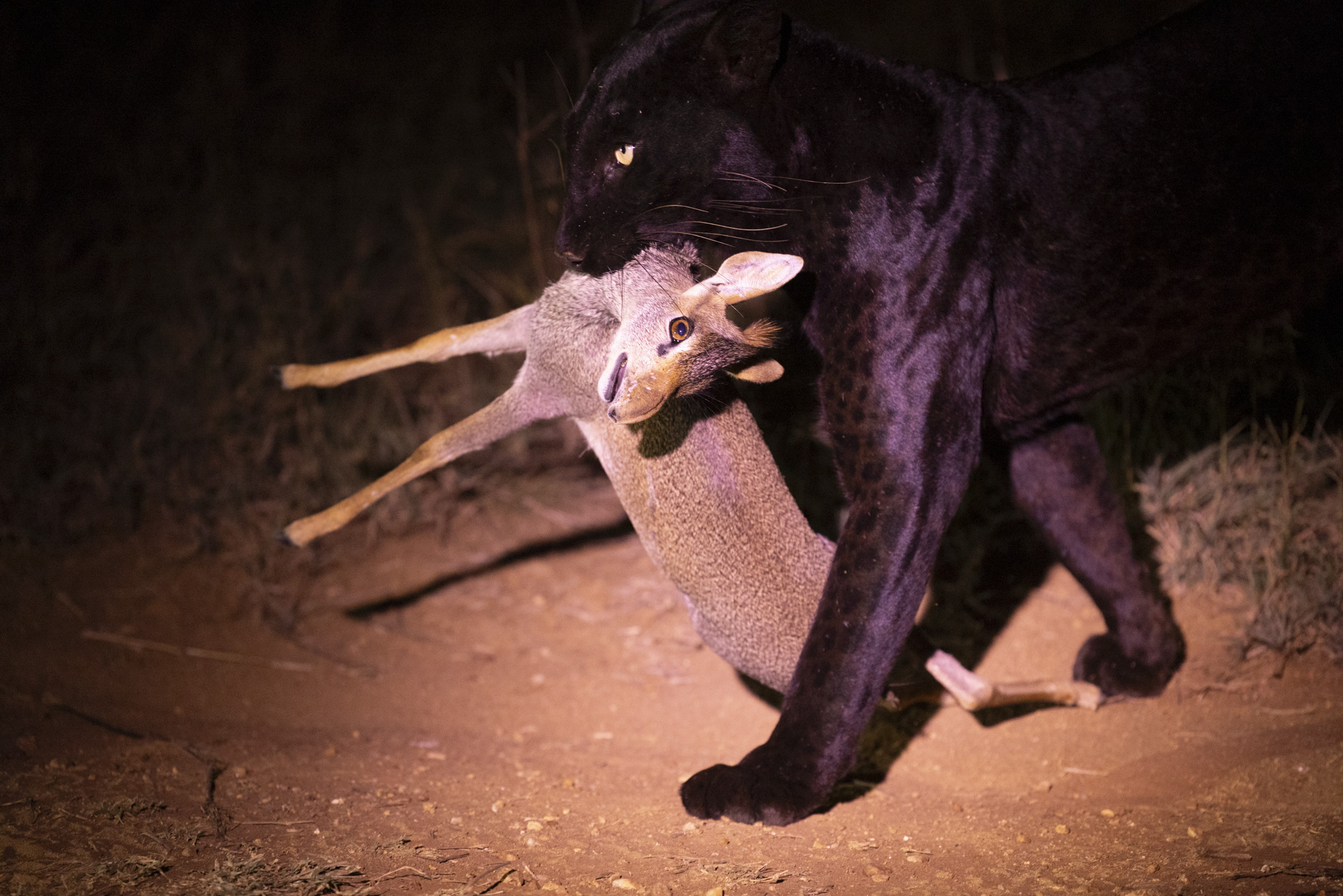
If it's just a gene, why are they so incredibly rare?
The gene for melanism is recessive. This means for a cub to be born black, both of its parents must carry the gene, even if they themselves are standard-spotted leopards. As you can imagine, the odds of two leopards carrying this rare gene finding each other and mating are very low, which is why black cubs are so few and far between.
For a long time, it was thought that melanism was a disadvantage for leopards on the open savannah, making them too conspicuous during the day. This is probably why historical records show them being more common in dense, dark mountain forests, like the Aberdares in Kenya or in parts of Southeast Asia, where a dark coat is excellent camouflage. What makes the black leopards of Laikipia so unusual and exciting is that they are thriving out in the relatively open bushland of the plateau.
Giza: The Star of Laikipia
For years, rumours of a black leopard in the Laikipia region circulated among guides and ranchers. Then, a few years back, the team at Laikipia Wilderness Camp started having consistent sightings. It was a young female, and they named her Giza, the Swahili word for “darkness.”
Giza has since become a global superstar. She was the subject of a groundbreaking project by biologist Nick Pilfold and photographer Will Burrard-Lucas, which produced the first high-quality, scientifically confirmed photographs of a wild black leopard in Africa in nearly a century. Suddenly, the world knew about Laikipia’s ghost cat.
The wonderful thing about Giza is that he has grown up relatively accustomed to the presence of safari vehicles. Her mother was a relaxed, spotted female who taught her that the quiet, respectful trucks posed no threat. This habituation is key. It means that when she is found, it's sometimes possible to spend quality time watching her - a privilege that is hard to overstate. She patrols her territory, hunts, and goes about her business, providing a breathtaking window into the life of one of the world's rarest animals. But let's be very clear: this is a wild animal with a huge territory. Sightings are never, ever guaranteed.
Planning Your Black Leopard Safari
Where to Go: The Laikipia Plateau
Your search takes place in Laikipia, a stunningly beautiful region in central Kenya, north of the equator. It’s a vast plateau stretching from the foothills of Mount Kenya to the edge of the Great Rift Valley. It isn't a national park. Instead, it’s a patchwork of private land, community conservancies, and ranches that have banded together for a common goal: conservation.
This model has been incredibly successful. Laikipia is now one of the most important wildlife areas in East Africa. It’s a vital stronghold for critically endangered species like black rhino and Grevy's zebra, and is home to the second-largest elephant population in Kenya. The landscape is a mix of savannah, rocky outcrops called kopjes, and riverine thickets, which is perfect habitat for the famously adaptable leopard.
Which Lodges Offer the Best Chance?
This is the million-dollar question. To have any realistic chance of seeing Giza, you need to be in her backyard. Her core territory is centered around the land where Laikipia Wilderness Camp and a few other small, dedicated lodges are located. The guides here are experts. They live and breathe this landscape. They know her habits, read the alarm calls of the other animals in the area, and spend countless hours tracking her. Staying at one of these camps is without a doubt your best bet.
Other fantastic lodges across the greater Laikipia area, offer incredible, world-class safari experiences. A leopard sighting, even a black one, is technically possible anywhere in the region, but it's much less likely. If seeing this specific black leopard is the primary goal of your trip, you need to be in the right place with the right team.
Beyond the Black Leopard: What Else to See in Laikipia
It's so important to remember that a safari here is about more than a single animal. Focusing only on the black leopard can set you up for disappointment. Instead, embrace the entire Laikipia experience, which is truly unique. You can search for the “Laikipia 5,” a collection of species not easily found elsewhere:
Grevy’s zebra (larger, with narrower stripes than the common plains zebra)
Reticulated giraffe (with their striking geometric pattern)
Beisa oryx (a beautiful desert antelope)
Gerenuk (the long-necked “giraffe-gazelle” that stands on its hind legs to browse)
Jackson’s hartebeest
Because many lodges are on private conservancies, you can also enjoy activities not allowed in national parks. Night drives are essential for spotting nocturnal animals like leopards (both black and spotted!), aardvark, and striped hyena. Guided bush walks, horseback riding, and even camel treks offer a completely different and more intimate perspective of the landscape.
Tips for a Successful Sighting
Let's ground ourselves in a little practical advice.
Manage Your Expectations: I can't say this enough. No sighting is guaranteed although the chance is pretty good., Go to Laikipia for Laikipia itself - if the black leopard appears, consider it a life-changing bonus.
Trust Your Guide: The local guides are phenomenal trackers. They will be looking for tracks, listening for the frantic chatter of vervet monkeys, and scanning every shadow. Your job is to be patient and trust their process.
Embrace the Night Drive: Leopards are most active under the cover of darkness. This is when Giza will be on the move, hunting and patrolling. A warm jacket and a sense of adventure are required!
Pack Accordingly: A great pair of binoculars is non-negotiable. For photography, a camera that performs well in low light is a huge advantage, as many sightings happen around dawn and dusk.
The Journey is the Destination
The search for a black leopard is more than just a quest for a photo. It’s an immersion into one of Africa's most successful conservation stories. It's about spending your days in a wild, beautiful place, learning from expert guides, and appreciating every creature you see, from the smallest dik-dik to the largest elephant.
Whether you're lucky enough to see the shadow cat move through the twilight or not, a journey to Laikipia is one that connects you to the true spirit of safari. It reminds us that there are still mysteries out there, hidden in the dark.
Ready to begin your search? Explore our collection of safari lodges in Laikipia to find the perfect basecamp for your adventure.